“I Haven’t Done Enough Problems Yet”
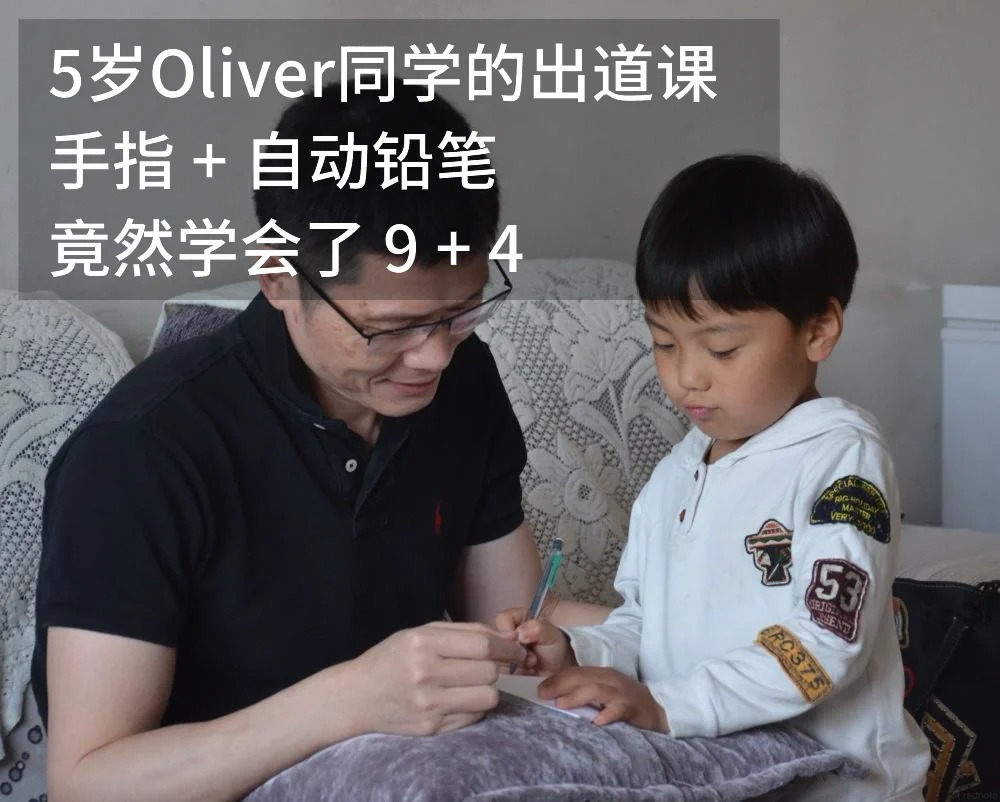
The first time we met Oliver was in his family's living room. He was five years old. He had never attended a math enrichment program. He had not yet started martial arts training. He knew only addition and subtraction within five. He stood beside the sofa while I sat down. He leaned over a cushion resting on my lap and wrote with a mechanical pencil I had brought from Toronto. It was our first meeting. It was Oliver's first lesson.
At the beginning, Oliver counted on his fingers for every calculation. I quietly said: "Why not try without your fingers? If it doesn't work, you can always use them again." He blinked and thought for a while. The problem was: 9 + 4 A few moments later, the answer appeared: 13 But what stayed in memory was not the answer itself. When the lesson ended, Oliver said: "I haven't done enough problems yet."
There was another detail. Oliver often wrote 6 and 7 backwards. Like two mischievous little characters, the numbers seemed to switch places on the page. Rather than correcting him immediately, we simply observed. Learning directions, symbols, and writing patterns takes time, especially for some left-handed children. Not every mistake needs urgent correction. Some only need time. Years later, this little boy who once reversed his numbers became a Sanda champion. The hands that once hesitated over 6 and 7 later carried confidence and strength.
Parents often notice whether a child "learned mental arithmetic."
But something more important happened that day.
A child who initially counted on his fingers:
tried thinking without them discovered a new ability experienced success wanted to continue
Mathematics changed from:
something adults asked him to do
into:
something he wanted to keep doing.
Sometimes the most important result of a lesson is not the answer.
It is:
"I want one more problem."
Six years later, I still remember the little boy leaning over the cushion.
The mechanical pencil.
The backwards sixes and sevens.
And the five-year-old who said:
"I haven't done enough problems yet."
Some first lessons stay with us for a very long time.