
Living Museum of Learning
Hal's Turnaround: From Struggling Student to Top Performer
One year ago, Hal's father, a senior executive at a publicly listed company, entrusted his son to me.
He spoke candidly. Hal's academic performance was poor, and he had been labeled a struggling student. Yet his father believed that Hal had much greater potential.
That trust carried both responsibility and motivation.
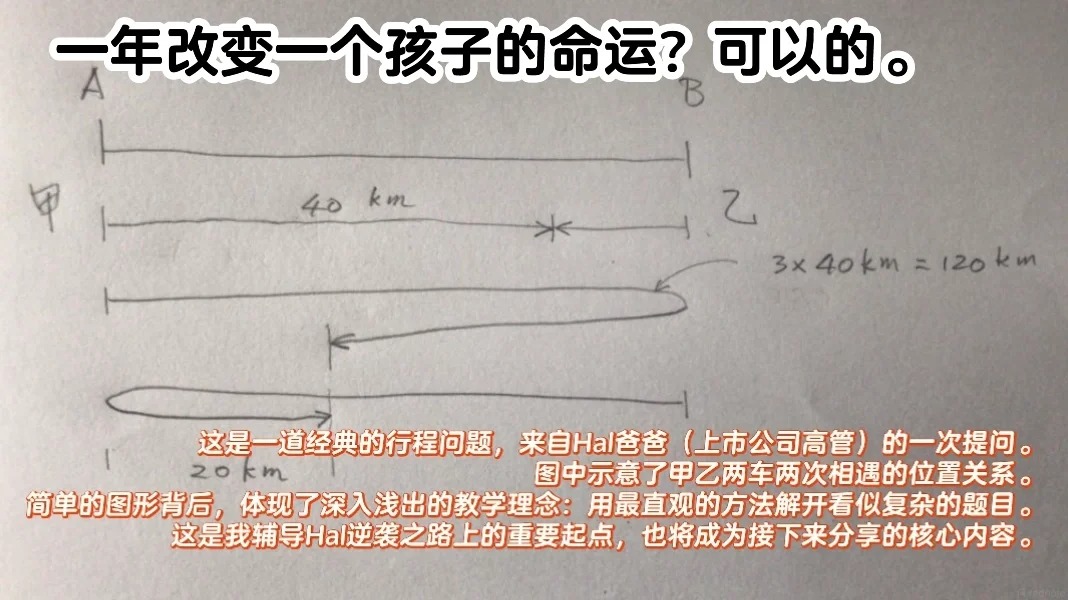
Before our regular lessons began, Hal's father showed me a well-known elementary mathematics problem involving two cars traveling toward each other between points A and B.
The problem became an example of the teaching style that would later guide Hal's learning journey: simple ideas, clear visual reasoning, and elegant solutions.
At the beginning, Hal's mathematical foundation was weak.
However, he possessed something equally important: curiosity and a strong interest in games and technology.
Our one-on-one lessons focused on several goals:
- strengthening fundamental mathematical concepts
- developing logical reasoning
- encouraging patience and persistence
- connecting mathematics with programming
Programming eventually became the turning point.
Hal independently developed a Rubik's Cube simulator app and implemented the underlying logic using code.
The experience transformed abstract ideas into concrete creations and greatly increased his confidence.
The transformation did not happen overnight.
Over the course of a year, Hal's grades, projects, notes, and ideas gradually changed.
He progressed from failing examinations to achieving perfect scores.
He moved from solving simple exercises to completing substantial programming projects.
More importantly, he began to see himself differently.
Programming made mathematics visible, interactive, and creative. Learning became an act of exploration rather than obligation.
His journey demonstrated that a student's future is often determined less by labels and more by the environment, guidance, and opportunities surrounding them.
Hal's story reminds us that many children who struggle academically are not lacking ability.
They may simply need:
- clear explanations
- patient guidance
- meaningful challenges
- opportunities to create
Mathematics and programming can work together to build confidence, curiosity, and perseverance.
Small improvements, accumulated over time, can eventually become a complete transformation.
Every child has hidden potential waiting to be discovered.
A student labeled as struggling can become a confident learner and creator.
Through patient teaching, strong foundations, programming projects, and sustained encouragement.
Because labels often underestimate children, while good guidance reveals possibilities that neither students nor adults initially see.