
Living Museum of Learning
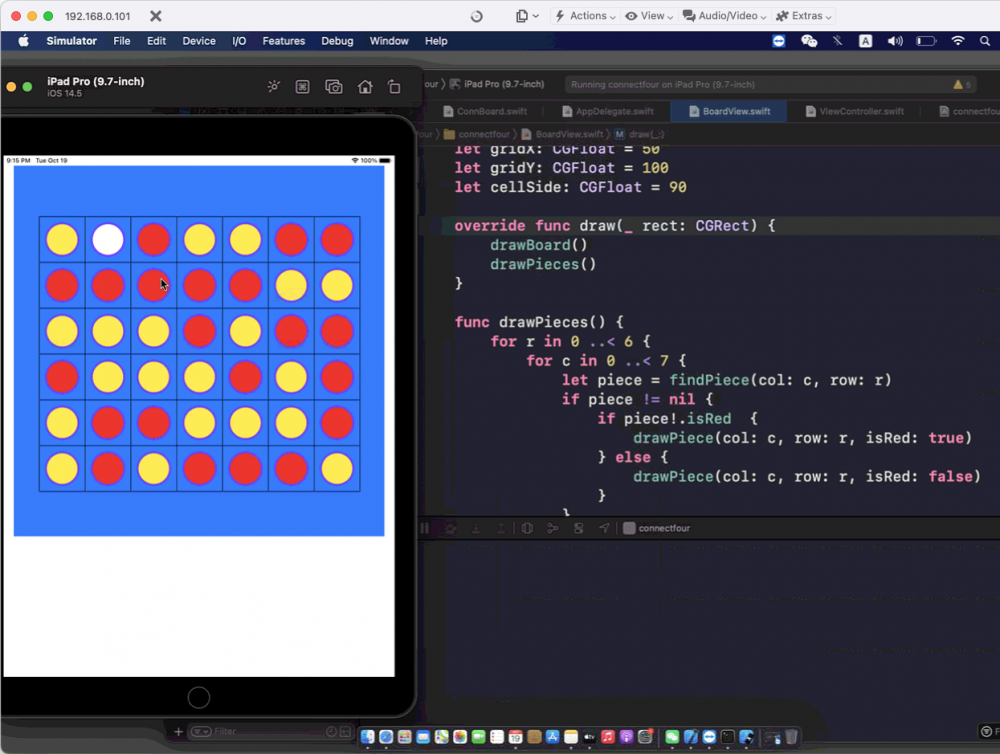
Albert's First Connect 4 Game
During the summer before Grade 6, Albert received his first Mac.
He had started learning programming from scratch.
One of his early projects was Connect 4.
Before building the game, he had never heard of Connect 4 and had never played it.
After several lessons, the program had finally reached the point where it was playable.
It was time for its first real game.
I asked:
"Would you like red or yellow?"
Albert answered:
"It doesn't matter."
It was his first game, so he had no reason to think about first-player advantage or opening strategy.
I said:
"You can go first. You're red."
Partly out of politeness.
Partly because I assumed experience would matter.
We began playing using the game he had written himself.
Move after move, Albert made no obvious mistakes.
The board gradually filled.
My opportunities disappeared.
Eventually I realized that I had no path to victory.
I resigned.
The first completed game played on his own Connect 4 program ended with the student defeating the teacher.
Only afterward did the result make sense.
Albert had studied Go for several years.
The habits of looking ahead, controlling space, and avoiding mistakes had quietly transferred to a completely different game.
The code was new.
The thinking was not.
Programming projects often become more meaningful when they are actually used.
A game is different once two people sit down to play.
For Albert, the project suddenly became:
software,
strategy,
competition,
and conversation.
The first game also revealed something important:
Skills do not always stay where they were learned.
The strategic thinking developed through Go had traveled into an unfamiliar game.
The student who had never played Connect 4 already knew how to think.
A student can design a playable game and immediately use it for genuine competition.
Strategic thinking developed in one domain can transfer to another.
Projects become meaningful when students use what they build to think, play, and compete.
The game ended on the 41st drop.
A Connect 4 board has only 42 holes.
Albert's very first game had nearly filled the entire board before the teacher finally admitted defeat.
The artifact is:
This exact board position is the first game ever played on Albert's own software.
Those moments disappear astonishingly fast.
Museums exist precisely because people eventually realize:
"I'm very glad somebody saved this." 😄