Living Museum of Learning
The Three Pages Waiting for Saturday
For years, Ethan has learned with Donald remotely, usually one hour a week. His current school is in the countryside, and he lives at school, so he has to wait until the weekend to use his own MacBook and meet Donald online from the other end of the earth.
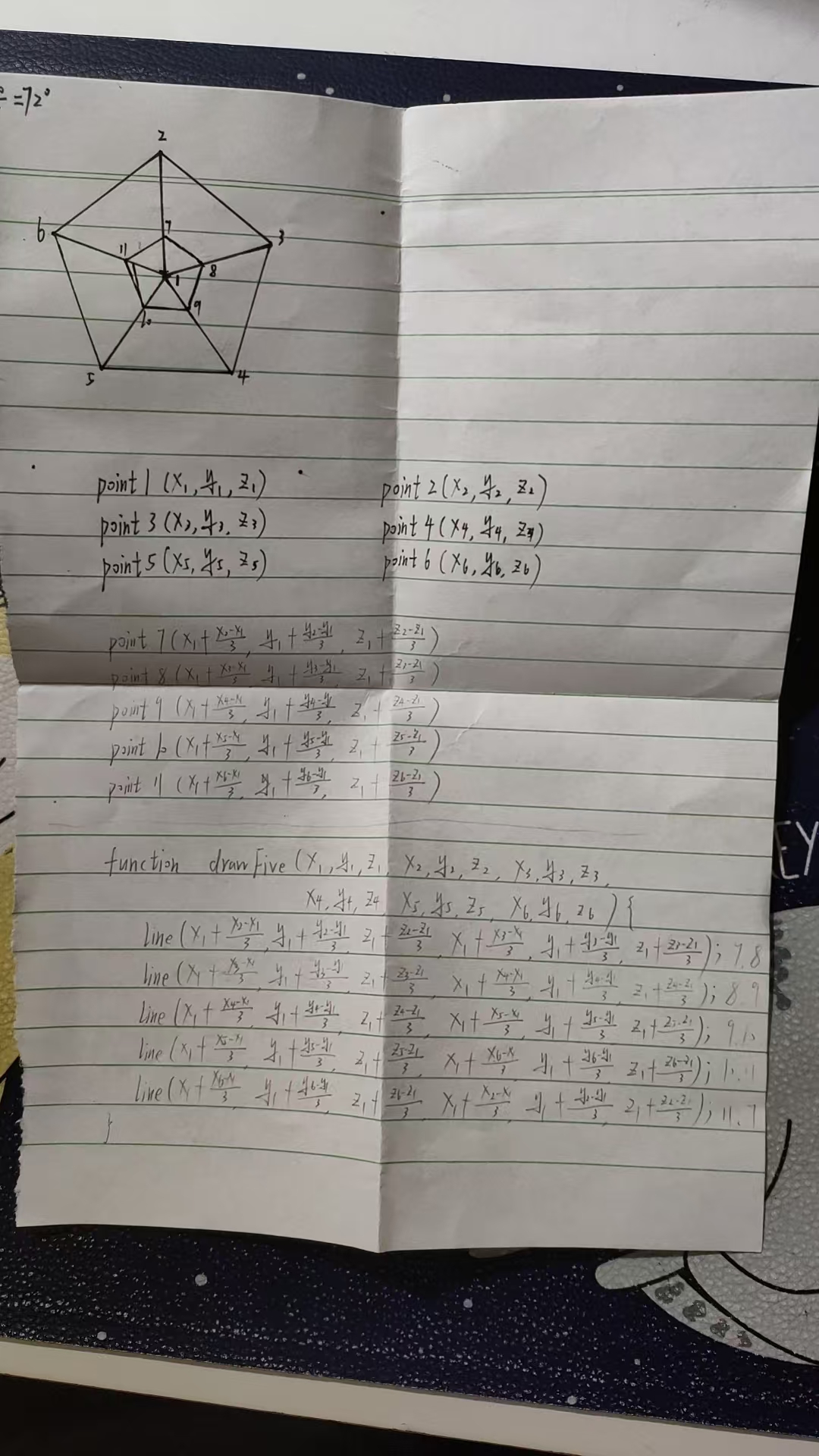
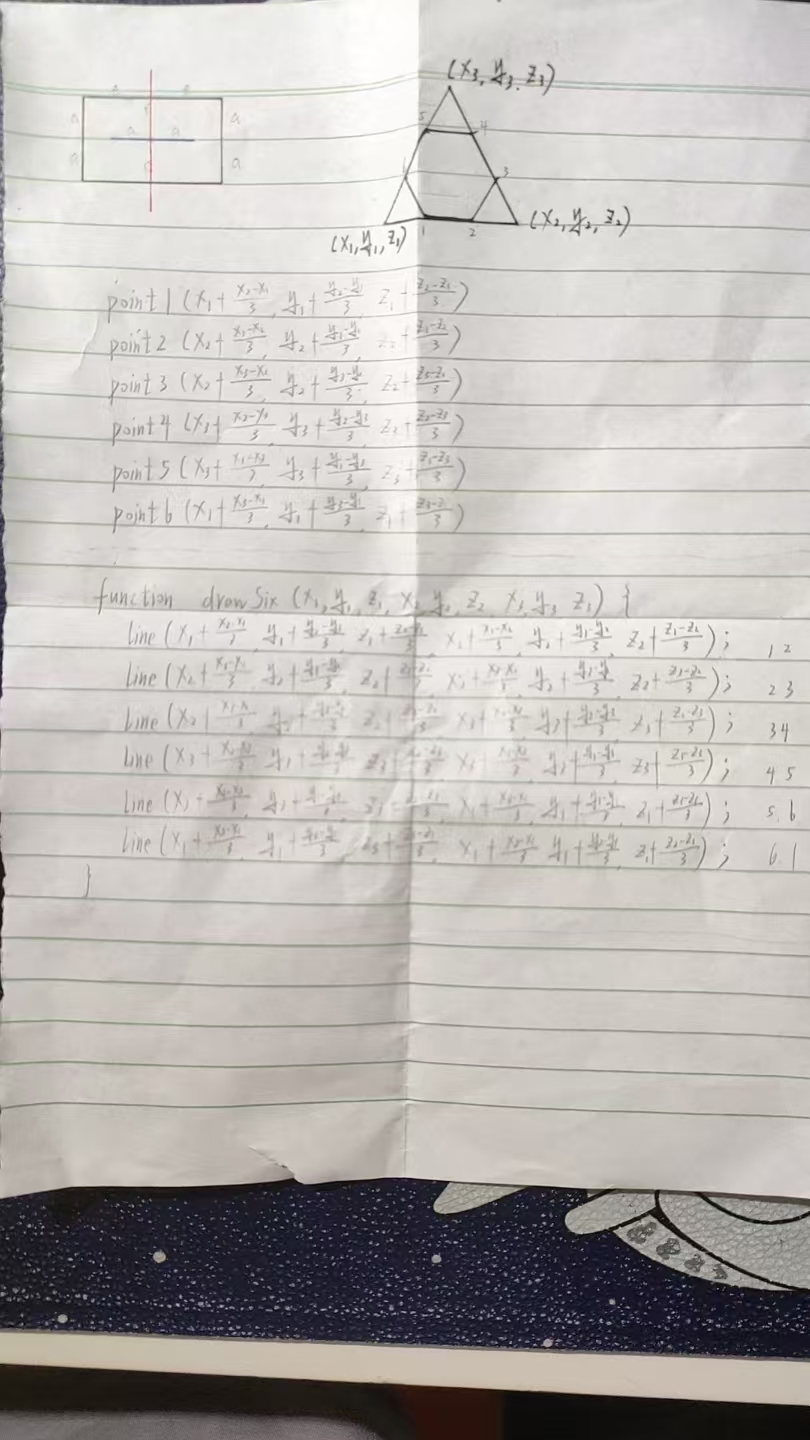
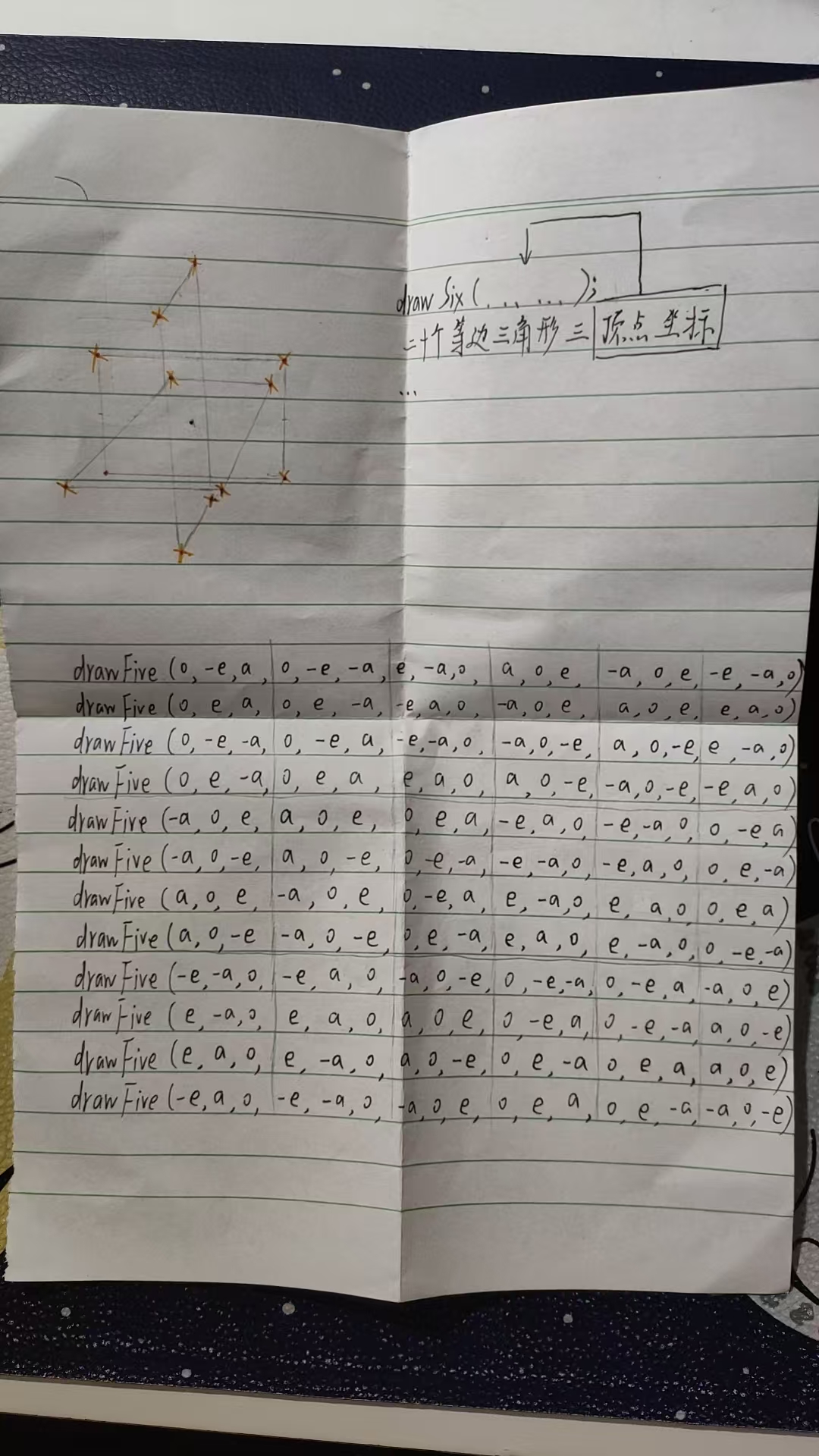
At school, after finishing his homework, Ethan continued working on his soccer-ball project. He calculated the geometry of the hexagons and pentagons on paper. But when he couldn't debug his calculations, he had no computer available to test them.
One day he told Donald:
“Uncle, I wrote some calculation on paper at school when I finished school homework. I couldn't debug so I just wrote it.”
At the end of class, he asked:
“Do you want to see my calculation?”
Donald expected some scratch work.
Ethan had written three pages.
Today, with his MacBook finally available, Ethan and Donald continued the project.
They borrowed Albert's idea and represented the twelve vertices of an icosahedron as an array:
let vertices = [
[-e, a, 0],
[-e, -a, 0],
[ e, -a, 0],
[ e, a, 0],
...
];
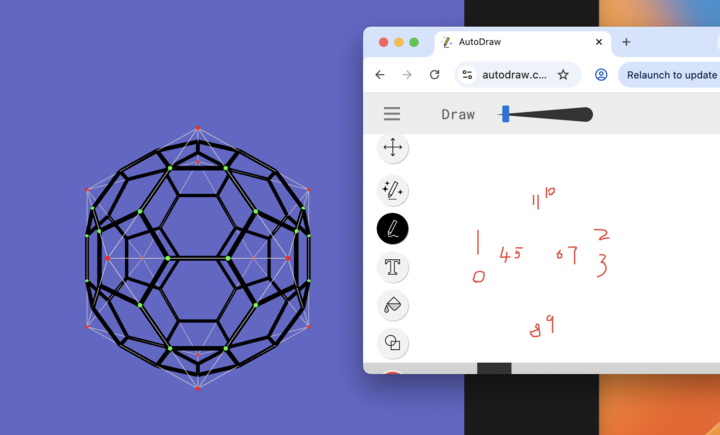
The moment the vertices became indexed data, Ethan made a simple but powerful decision: he drew a little map beside his P5JS output showing which physical point was #0, #1, #2, ... #11.
Now the geometric object on the screen and the data inside the program could speak the same language.
The twelve vertices became the foundation for the entire construction.
Ethan connected the appropriate vertices to create the hexagonal structure. Then something beautiful happened:
The pentagons did not need to be programmed separately.
Once the hexagons were connected correctly, the pentagonal faces appeared automatically.
For the first time, both Ethan and Donald saw the complete truncated icosahedron emerge from their own calculations and code — the geometric structure of a soccer ball.
It was the first time Donald had ever seen a truncated icosahedron come out of a debugging machine.
It was Ethan's first time too.
The three pages he had written at school were no longer mysterious calculations on paper. The computer finally gave them a place to become visible.
A computer is not merely a machine for producing answers. It is a machine for testing ideas.
Ethan had already done something remarkable without one: when he couldn't debug his calculation, he did not abandon the problem. He kept calculating on paper.
Then, when the computer became available, he did something equally important: he created a small map to help himself understand the relationship between the geometry and the indexed array.
The learning moved through several representations:
geometry → mathematics → paper → indexed data → code → visualization → debugging → discovery
The most important object produced that day was not the soccer ball.
It was a young learner beginning to build his own bridge between mathematical thought and computation.
A student can carry a difficult mathematical problem beyond the classroom, work on it independently, and eventually turn the calculations into a living computational object.
Give curiosity time, preserve unfinished questions, provide the right tools, and let paper, mathematics, code, and visualization reinforce one another.
Because the deepest learning may begin when a student cannot solve or debug something yet, but keeps thinking anyway.