
Living Museum of Learning
The Freedom to Teach
For the first 4.5 weeks, Tianjing had one sacred rule: 3:00 pm, her local time.
Every day.
Donald could teach her almost anything, and the class could sometimes grow far beyond its nominal one hour—but the starting time stayed 3:00.
Enning was different. From her very first day, she was flexible.
And because school had not yet started, every day was effectively a weekend. There was no need to squeeze learning into a conventional weekday schedule.
The normal class was one hour.
But one hour was no longer necessarily the boundary.
The Google Calendar became surprisingly movable.
Donald could drag the bottom of a class down by 15 minutes.
Then 30.
Then 45.
If the learning was still alive, the class could simply continue.
The longest class with Tianjing became two uninterrupted hours.
With Enning, it reached three uninterrupted hours.
These were not three-hour classes that had been scheduled in advance.
They became three-hour classes because nobody needed to stop merely because the original appointment had ended.
Then, after 4.5 weeks, something else changed.
On September 5, Tianjing asked:
“那个我明天几点上课啊”
Donald asked:
“What is your favorite time?”
Tianjing answered:
“都可以.”
Donald replied:
“So similar to today, whenever I wake up and have my breakfast.” 😂
Tianjing:
“好的.”
And just like that, Donald discovered that he had earned a little freedom from Tianjing.
The freedom to teach was never really about teaching at midnight.
It was about not having to stop when the clock said so.
It was about being able to teach every day.
It was about choosing the time together.
It was about letting a one-hour class become 1:15, 1:30, 1:45, 2 hours—or, once, 3 hours—when something was still worth pursuing.
And then there was another key.
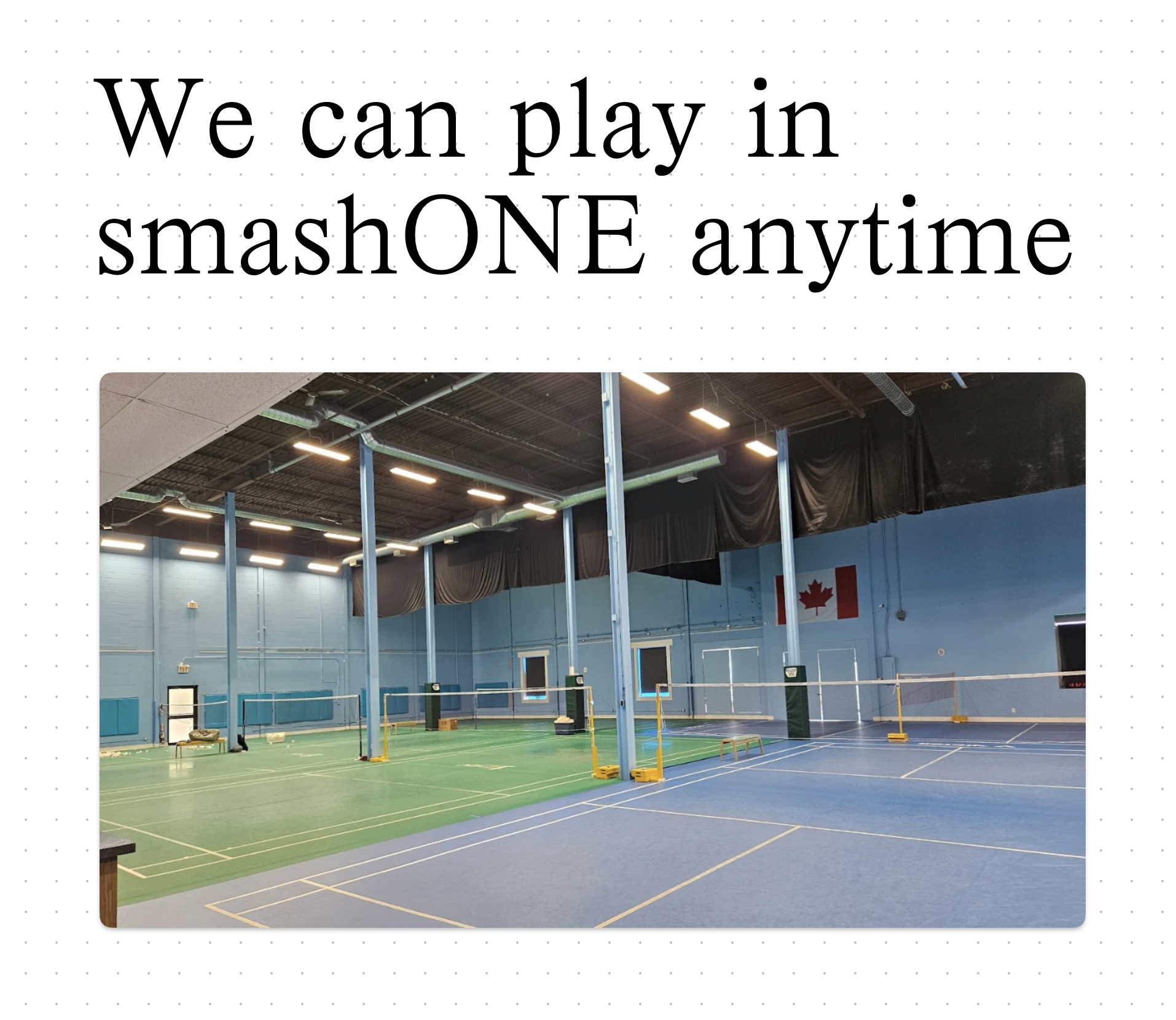
Two days before this exhibit, Cindy and Donald received the key to SmashOne Badminton.
The co-owner Jianping said:
“You can come anytime. You are members.”
A badminton court key and a teaching calendar seem to have nothing to do with each other.
But they carry the same idea.
The key means:
We don't have to wait until 10:00 am for someone else to open the door.
The flexible teaching schedule means:
We don't have to stop at the time someone else put on the calendar.
In both cases, the freedom is not necessarily used.
Donald probably won't play badminton at midnight.
He won't turn every one-hour lesson into three hours.
But knowing that he can changes everything.
Freedom does not necessarily mean doing more.
Sometimes it means removing an unnecessary boundary.
A key can remove the boundary of a locked door.
A flexible schedule can remove the boundary of a clock.
And a trusting student can remove the boundary of a fixed appointment.
Donald thought he was giving his students freedom to learn.
Five weeks later, he discovered something else:
they were giving some freedom back to him.
Enning gave it from Day 1.
Tianjing took 4.5 weeks. 😂
And perhaps that is part of what made these five weeks so extraordinary.
The teacher had enough freedom to follow the learning wherever it went.
More than 100 exhibits emerged.
Not because Donald planned to produce 100 exhibits.
They simply kept appearing.
Freedom is not having unlimited time.
It is having enough trust and flexibility that the learning—not the clock—can decide when to stop.
A one-hour class can become two hours. A normal schedule can become daily learning. A teacher can follow curiosity instead of the clock.
Through trust, continuity, flexibility, and the freedom to move the boundaries when the learning is still alive.
Because sometimes the most valuable part of learning begins precisely where the scheduled lesson was supposed to end.
👣 The journey continues.