Living Museum of Learning
Two Milestones on Day Two
It was only the second day of Tianjing's Grade 9 life.
Yesterday was her first day at a new school, surrounded almost entirely by strangers, with English still making much of the day difficult to understand.
Today was different.
She came to class knowing that school was becoming a little easier.
And Donald had two very different playgrounds waiting for her: a triangle and a chessboard.
For the triangle, Donald didn't hand her a worksheet and say what to calculate.
Instead:
You pick a triangle.
You name an angle.
Now let's play.
Almost every decision came from Tianjing.
A triangle happened to look interesting. An angle became worth naming. Two sides became something to compare.
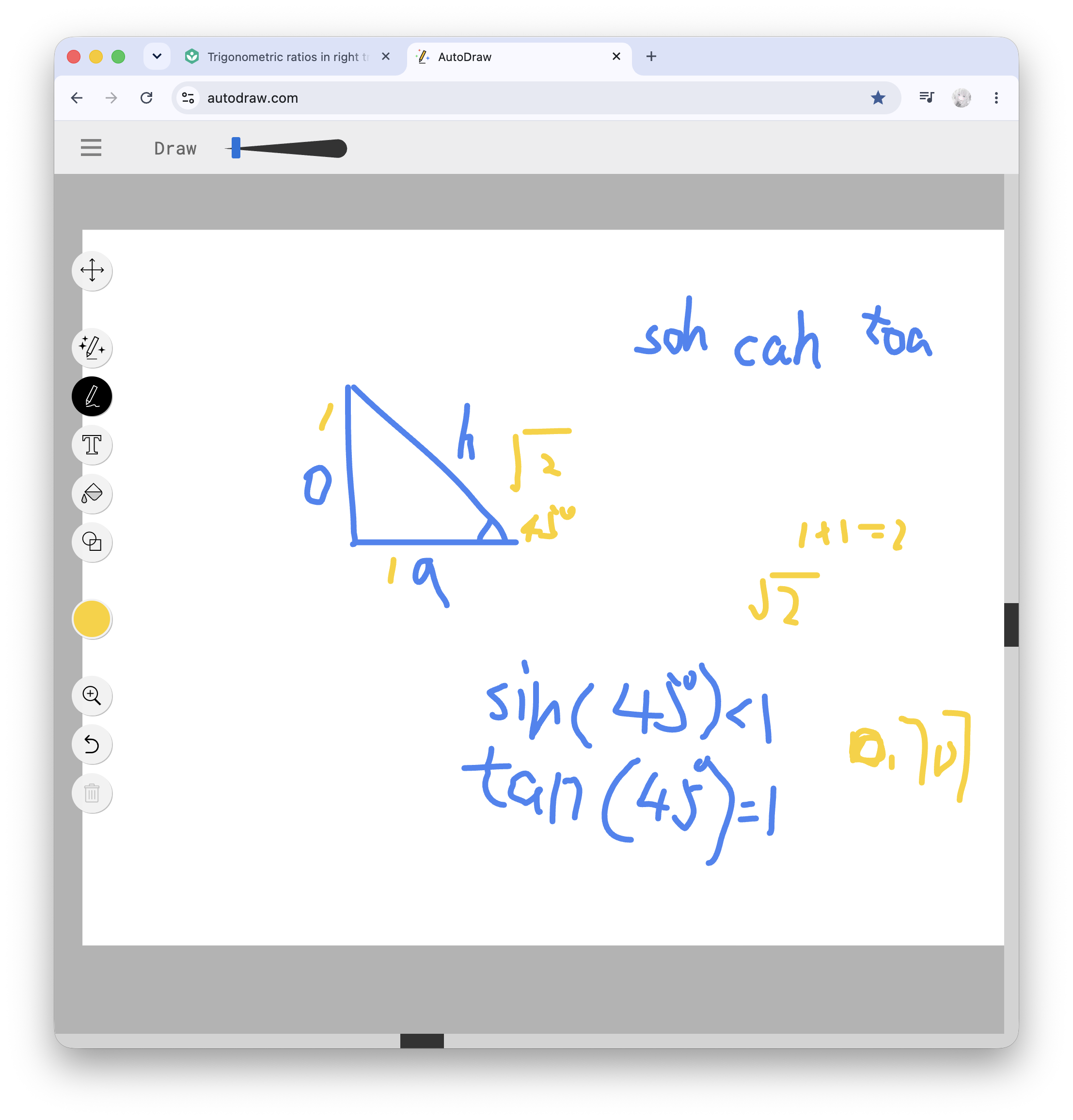
If a 45° triangle appeared, they played with it.
If a 30° triangle happened to appear, they could play with 1, 2, and √3 instead.
SOH CAH TOA appeared naturally.
Then came ratios, decimals, bounds, and the realization that some things simply cannot be larger than 1.
The mathematics was not presented as a collection of rules.
The triangle was something she could touch.
And then came the second milestone.
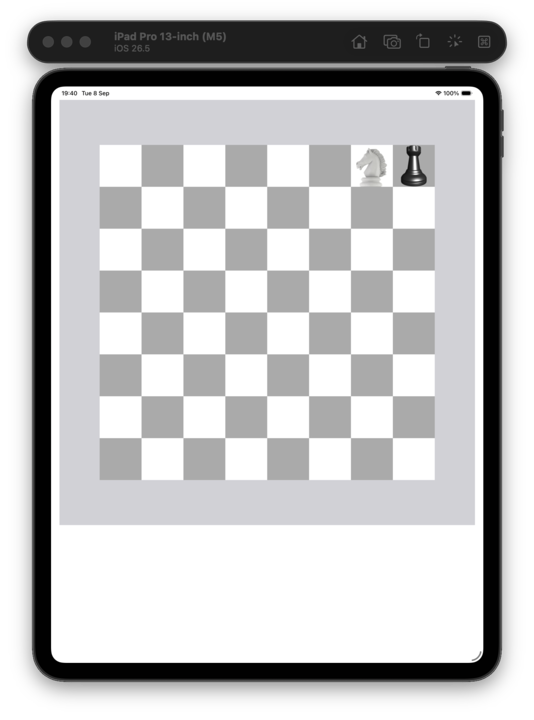
They opened her iOS Chess project.
Until now, the board had mostly been something she could draw.
Today, Tianjing took her first touch of a model.
Instead of immediately building a sophisticated chess architecture, Donald deliberately made the world tiny:
struct Piece {
var col: Int
var row: Int
var rank: Int
var color: Int
}
Two pieces were enough.
And rank was simply an Int.
Give any number to any piece.
Change an integer.
Run the program.
The piece appears somewhere else, or behaves differently.
Suddenly something that had been a drawing became something that could represent a thing.
The rendering code felt almost like magic:
Change the numbers → the chessboard changes.
Tianjing had touched the idea of a model.
Two milestones, in one day:
Mathematics:
A triangle is not just a diagram in a textbook. It is a world you can explore by making your own choices.
Programming:
A chess piece is not just something you draw. It can become an object represented by data, and changing that data changes the world you see.
And underneath both lessons was the same idea:
Give the child a small world.
Let the child make the decisions.
Let the world answer.
That is how ownership begins.
A 13-year-old beginning Grade 9 can move naturally between mathematical exploration and computational modeling.
Give her simple objects, simple controls, and room to make the choices herself. Then let the consequences teach her.
When the decisions belong to the child, the mathematics and the code begin to feel like her own stuff.
Grade 9, Day 2.
One triangle.
One chessboard.
Two milestones.
And a girl beginning to discover that she can decide what happens next.