
Living Museum of Learning
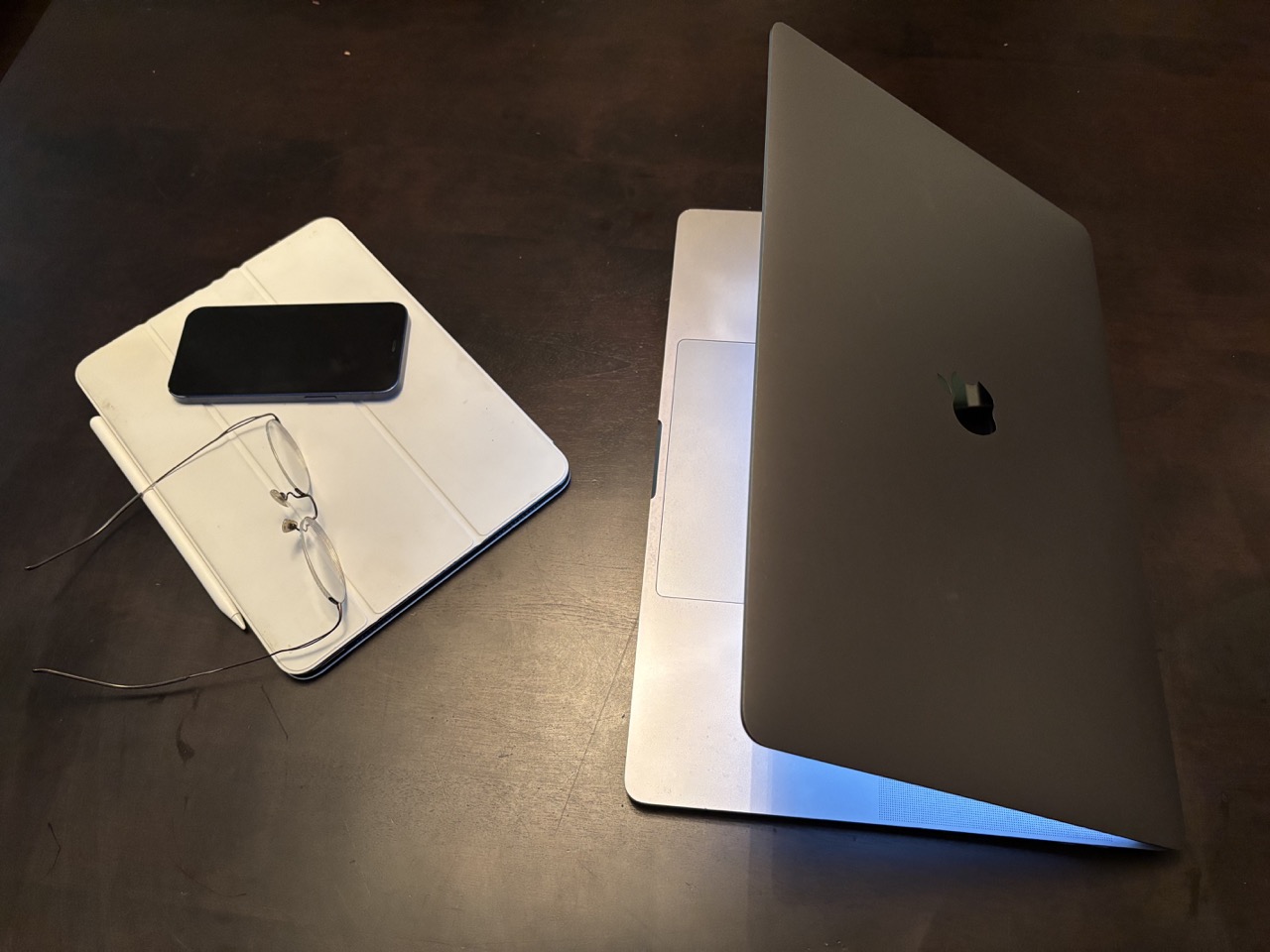
The Computer That Became a Museum
Situation
I rarely save links.
But on September 25, 2026, my younger brother Paul sent me a 40+ minute video of a very young Steve Jobs. I had never seen it.
Paul sent me this Steve Jobs video.
Watch the video →
I rarely save links, but this one is worth keeping.
Paul and I rarely have private chats like this. Yet somehow, this particular video opened a door.
We talked about Steve Jobs, Elon Musk, vision, hard work, and the strange experience of watching the future being described decades before we actually lived in it.
Paul remembered PCB layout software appearing in the mid-1980s and using it himself in 1991.
I remembered something much more personal.
My first Apple computer was a little MacBook with a white plastic cover. I don't even remember why I bought it.
But I remember what I thought about the silver MacBooks.
They looked like computers belonging to CEOs, top officials, or people on Wall Street.
Not ordinary people like me.
Turning Point
Then Cindy changed something.
In 2019, she encouraged me to buy the best personal computer.
I went for what seemed almost ridiculous at the time:
64 GB of memory.
1 TB of storage.
A crazy man and a crazy wife. 😂
Seven years later, I look at that machine differently.
It wasn't merely a computer.
It became the machine from which 400+ Living Museum exhibits eventually poured out.
Programs. Games. Student projects. Stories. Experiments. Early-morning coding. Ideas that turned into other ideas.
The computer became a kind of workshop for a life that I hadn't planned.
Emergence
There is another chapter to this story.
When An entered Waterloo to study Computer Science and Business, she had just bought herself a brand-new HP laptop.
A few weeks later, Cindy and I bought her a brand-new MacBook Air instead.
We retired the HP almost immediately.
I told An why:
“If you use the best products, you are likely to build the best thing later.”
It wasn't really about Apple.
It was about living inside good work.
If the tools you use are beautifully designed, powerful, responsive, and carefully thought through, you begin to develop a feeling for what good work feels like.
You don't just learn how to use a tool.
You absorb its standards.
And An eventually did something rather satisfying with that philosophy.
She became a core developer at Uber, later a tech manager there, and is now a tech manager at LinkedIn.
She didn't merely use products.
She ended up helping build them—and eventually leading people who build them.
The Apple Thread
I didn't even like the shape of the first iPhone.
Then came the iPhone 4.
It was my first iPhone.
I loved it to death.
I remember touching it and thinking about Steve Jobs to the point of tears.
At the time, I didn't have the language for why.
Perhaps it was because the object in my hand represented something I had once thought belonged to another world.
The same thing happened with the silver MacBook.
Once, I couldn't imagine an ordinary person like me owning one.
Then one day I was using one.
And eventually, I was using Apple products almost like breathing air.
Learning
Maybe this is what technology does at its best.
It quietly moves the boundary of what feels possible.
A product that once looks impossibly distant becomes ordinary.
Then the ordinary becomes a tool.
Then the tool becomes a workshop.
Then the workshop becomes a place where someone makes something that didn't exist before.
And sometimes, if you're lucky, the things made in that workshop become part of the lives of other people.
I once thought a silver MacBook belonged to people at the top of the world.
Now I look at mine and see something much stranger:
400+ exhibits.
Not because the computer was magical.
Because someone kept opening it.
The Steve Jobs Connection
The 40+ minute Steve Jobs video Paul sent me is now something I want to watch again.
And again.
And again.
Because the young man speaking in that video was describing a future that, at the time, was still largely invisible.
I eventually became one of the people living in that future.
Paul remembered using the technology.
I remember using the products.
An is helping build the products.
And now I am preserving the whole journey in a museum.
A link that I would normally never save has become an exhibit.
Theme
Tools become part of imagination.
What Is Possible
A tool that once seemed to belong to “people like them” can become part of your ordinary life—and eventually part of what you create.
How Does It Happen
Use good tools. Pay attention to how good things are made. Build. Experiment. Keep going.
Why Does It Matter
Because the boundary between using the future and building the future can be much thinner than we imagine.
Artifact
The 1983 Steve Jobs video shared by Paul.
A 2019 MacBook with 64 GB memory and 1 TB storage.
An's MacBook Air.
An iPhone 4.
And, perhaps most importantly:
the 400+ exhibits that somehow came out of one crazy computer.
Epilogue
Steve Jobs once talked about the future.
Paul sent me the video decades later.
Cindy told me to buy the best computer.
I opened it.
And kept opening it.
Seven years later, there is a museum inside.