
Living Museum of Learning
Enning Chooses Her Arc
Situation
Enning's PulleyView.swift was created on September 29.
Four days later, she came back to it.
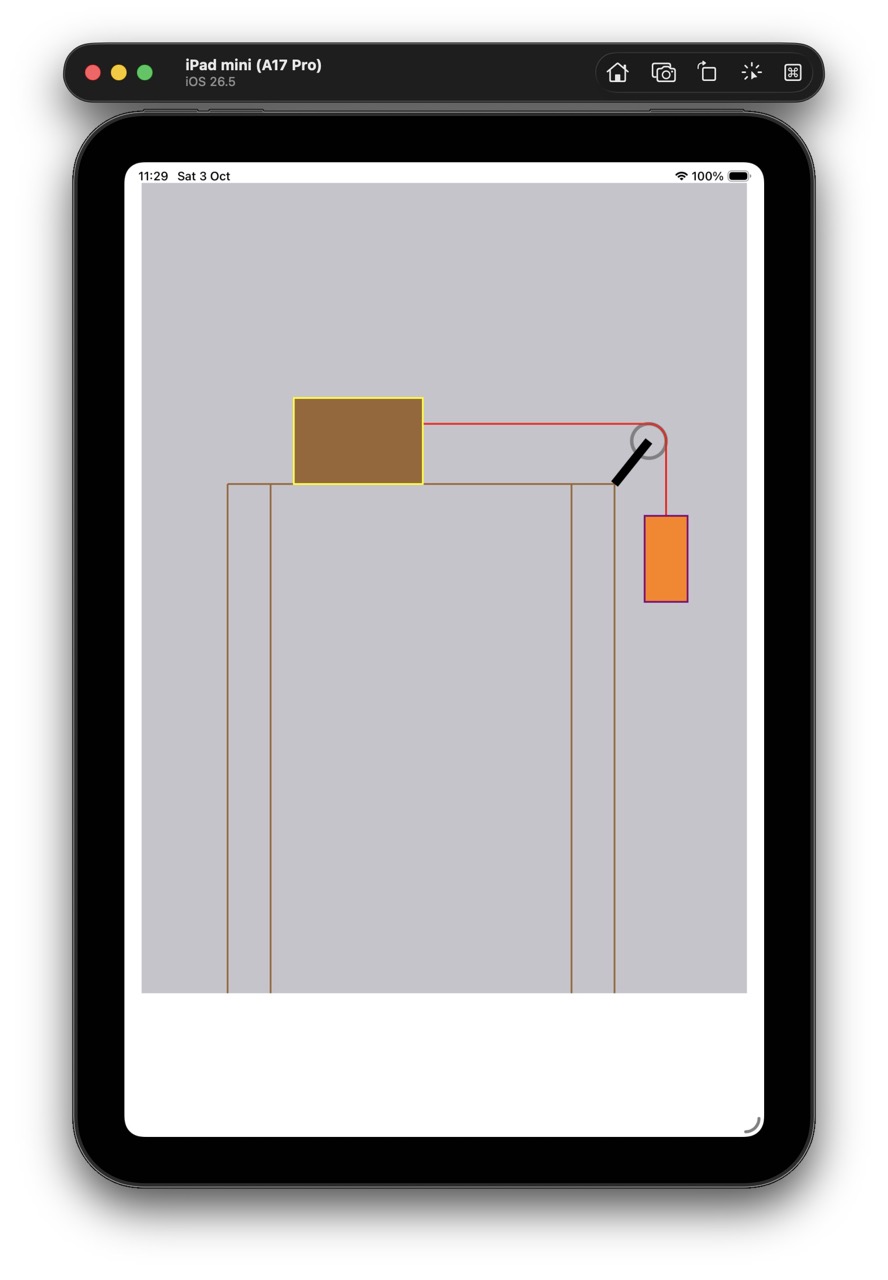
The pulley already had a table, wheel, boxes, and ropes. Today, we wanted the rope to wrap naturally around the wheel.
That meant drawing an arc.
Turning Point
We needed a quarter-circle.
But there were two different ways to draw the quarter-circle we wanted.
So we talked.
Where should the arc start?
Where should it end?
Which direction should it travel?
What does clockwise actually mean?
We stayed with the problem until Enning could clearly describe both approaches.
Then she chose her favorite way to implement it.
That choice mattered.
She wasn't just following instructions for drawing an arc. She understood the geometry well enough to decide how she wanted to express it in code.
Emergence
Her final version carefully controls the colors and line widths of the different parts of the pulley.
And now the arc is described explicitly:
let circle = UIBezierPath(
arcCenter: CGPoint(x: circleX, y: circleY),
radius: wheelRadius,
startAngle: 0,
endAngle: 2 * CGFloat.pi * 3/4,
clockwise: false
)
The same thing happened with the rope lengths.
Instead of hiding the geometry inside drawing commands, Enning pulled the relationships into named quantities:
let topRopeLength: CGFloat = 200 - 137 + 200
let rightRopeLength: CGFloat = 150 + 137 - 200
The computer isn't simply being told what picture to draw anymore.
It is being given a little model of the picture.
Learning
Sometimes programming means finding a correct way, not the correct way.
Understand the idea first.
Describe it clearly.
Explore the possibilities.
Choose one.
Then make it real.
And Then Something Wonderful Happened
Near the end of class, I looked at her new pulley and said:
“Compared with your first version, today's is much prettier.”
Enning's answer was immediate, clear, and loud:
“Very much!”
And she was genuinely happy when she left.
That morning, I had sent Enning's family a BrainyQuote:
“Spread love everywhere you go. Let no one ever come to you without leaving happier.”
— Mother Teresa
I didn't know yet how perfectly it would fit the end of the day's class.
Enning came to class to make a pulley better.
She left having understood more, created more, and recognized her own progress.
And she left happier.
Theme
Learning is not only about becoming better at something.
Sometimes, becoming better makes you happier, too.
What Is Possible?
A child can turn geometry into code—and choose her own way to do it.
How Does It Happen?
By staying with a problem until the idea becomes clear enough to explain, choose, and create.
Why Does It Matter?
Because a good learning experience can leave a child not only knowing more, but happier than when she arrived.