For more than eight years, almost every student who learned with us encountered the game of 24.
It often began simply: four numbers, a deck of playing cards, and a challenge to reach 24.
At first, it looked like an arithmetic exercise. But the puzzle rarely stayed still.
Students began to explore structure: parentheses, operator precedence, and alternative expressions. The question quietly shifted from “Can I solve it?” to “How can I represent this more clearly?”
Some students asked how a computer might evaluate their expressions. That question led naturally to postfix notation and stack-based evaluation.
Others wrote small programs in Python to check answers or generate puzzles. The puzzle became a bridge into programming itself.
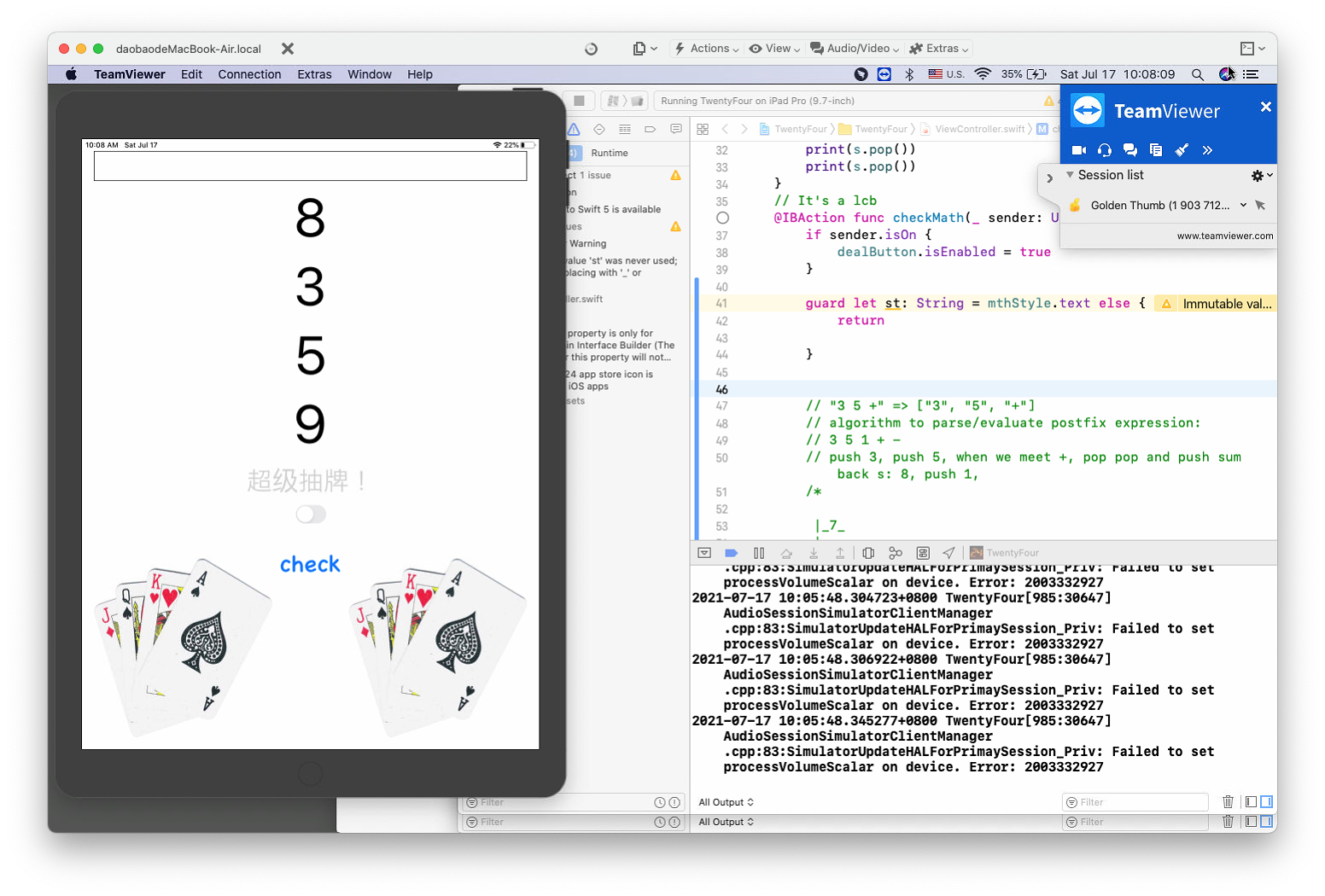
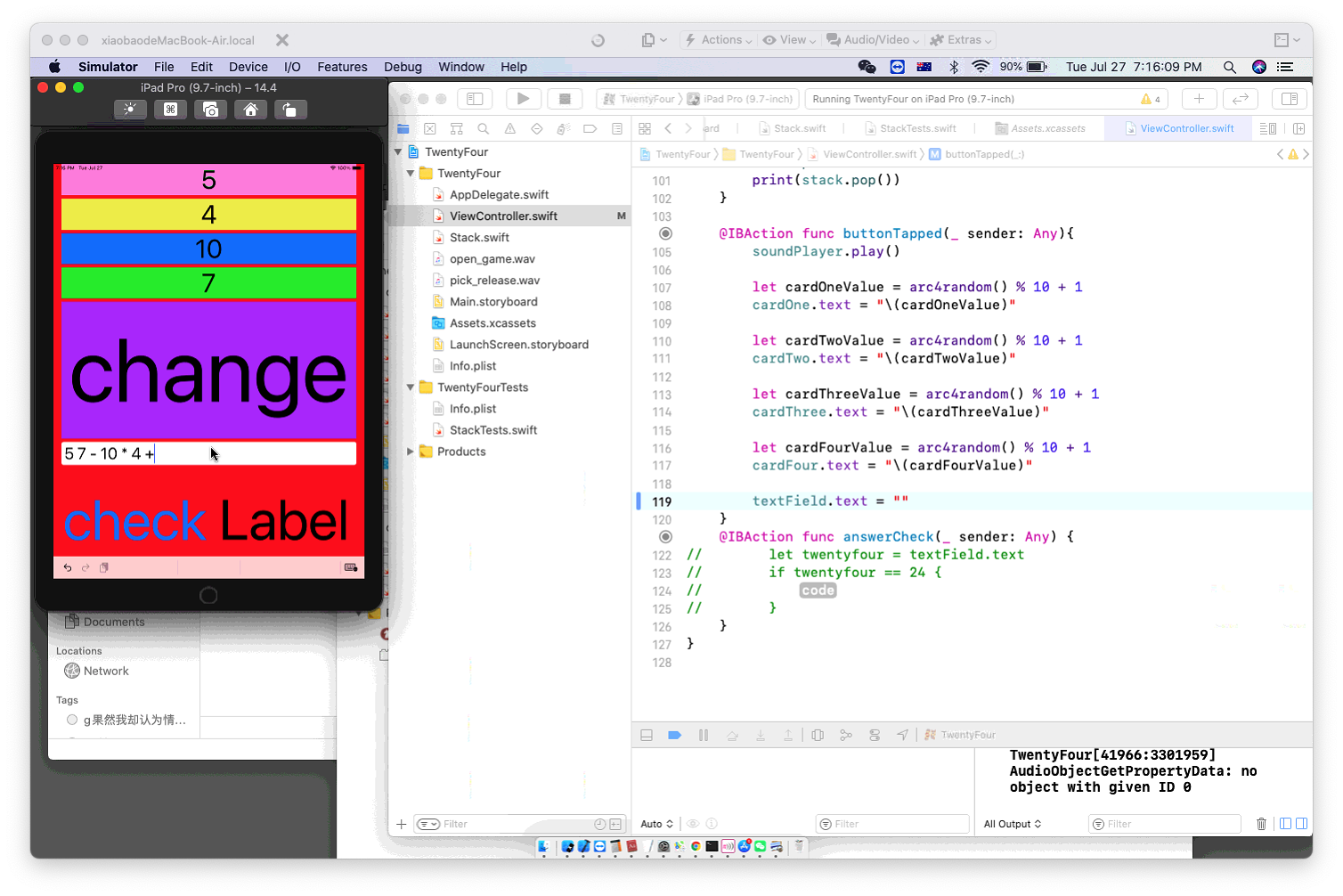
Later, the same idea appeared again in a different form—this time in iOS apps built with Swift and Xcode. Interfaces were designed, answer checkers refined, and user experiences improved.
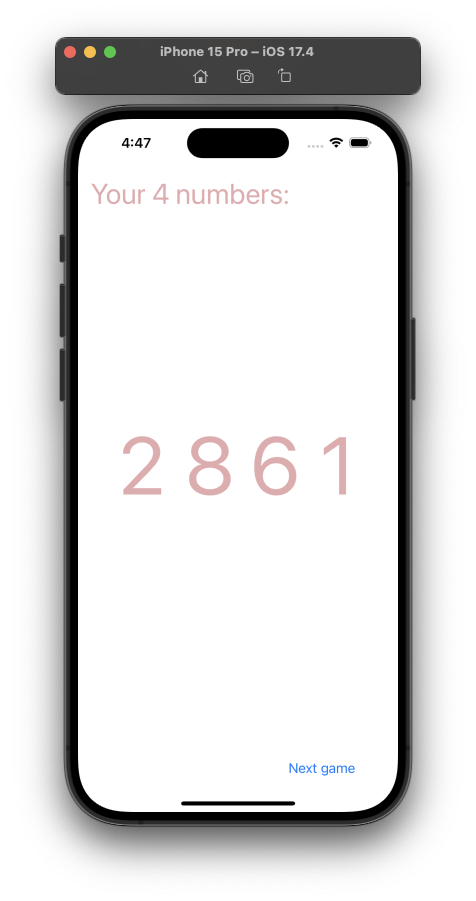
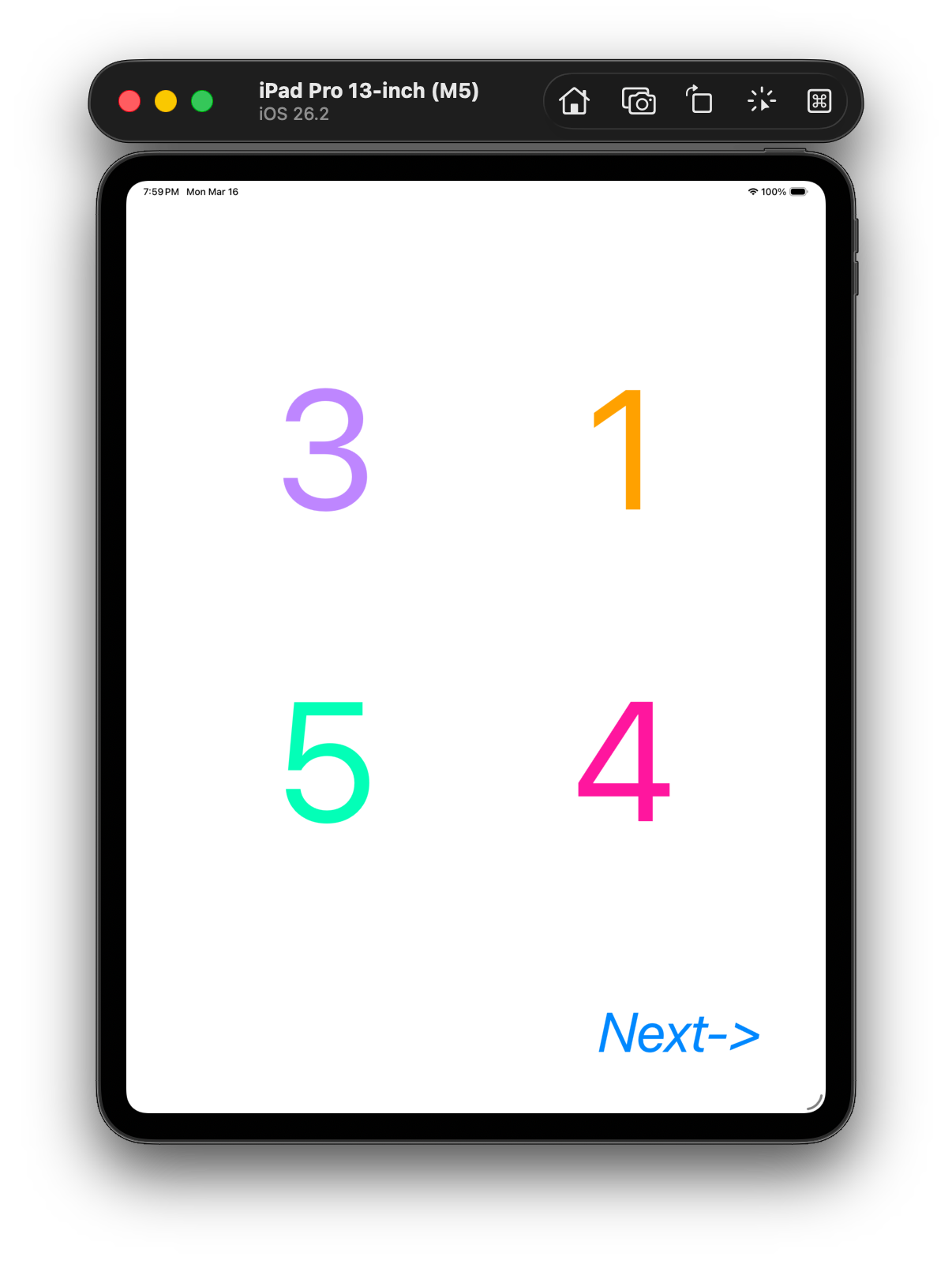
These images are fragments from different stages of exploration. They are not “screenshots of an app,” but records of thinking in progress.
Eventually, what began as a classroom activity became a published application:
View Golden 24 on the App Store →
But the app is not the most important outcome.
The most important outcome is that a simple puzzle survived long enough to evolve across many minds, tools, and languages.
Looking back, Golden 24 is not something that was built once. It is something that was gradually discovered through repeated encounters with students, over many years.
In that sense, this exhibit is still not finished.