Leo — Learning Under Constraint
Standing beside the dinner table for better network speed
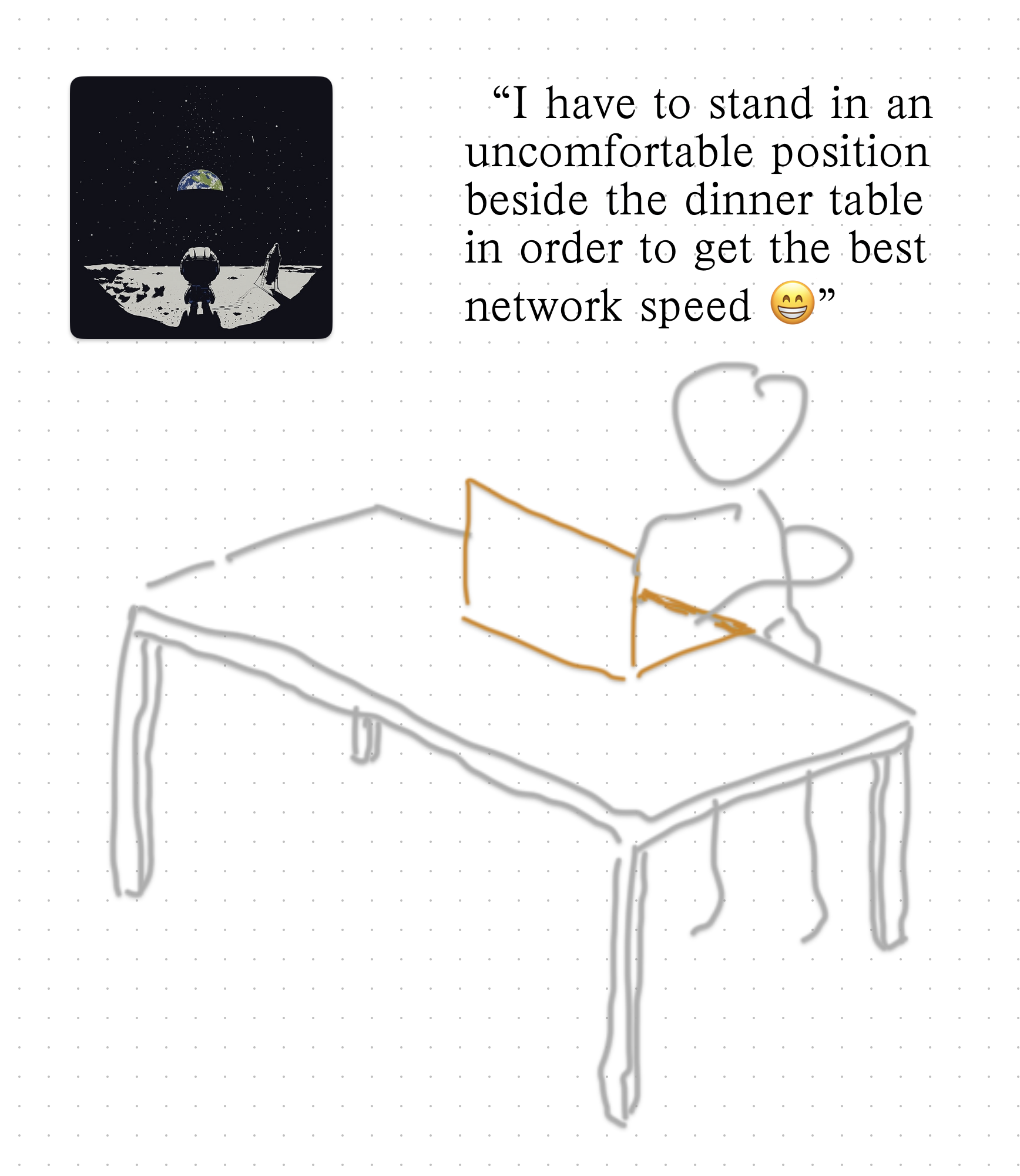
Leo — working beside the dinner table under network constraints (2026.01.07 sketch)
Leo began his coding session in an unusual way:
“For better network speed, I have to stand in an uncomfortable position beside the dinner table.”
Despite the environment, he worked through complex number multiplication and successfully implemented a product_of function.
He then noticed something important: edge cases in his Complex class were not displaying cleanly.
After class, he continued refining his work:
- Replaced hardcoded tests with user input
- Debugged the __str__ method
- Tested all sign combinations of real and imaginary parts
Final __str__ implementation:
def __str__(self):
    if self.im < 0 and self.re != 0:
        return f"{self.re} - {abs(self.im)}i"
    elif self.im < 0 and self.re == 0:
        return str(self.im) + "i"
    elif self.im == 0 and self.re == 0:
        return "0"
    elif self.im == 0 and self.re != 0:
        return str(self.re)
    elif self.im != 0 and self.re == 0:
        return str(self.im) + "i"
    else:
        return f"{self.re} + {self.im}i"
Result examples:
1.0 + 1.0i
1.0 - 1.0i
-1.0 + 1.0i
-1.0 - 1.0i
What stood out most was not correctness, but mindset: noticing edge cases, refining behavior, and continuing after class.
Learning is not a single execution. It is iterative refinement.
Small constraints often produce strong focus. Mathematics, logic, and code quietly reward persistence.