
Living Museum of Learning
Shanghai Grade 6 Student Builds a University-Level Programming Project
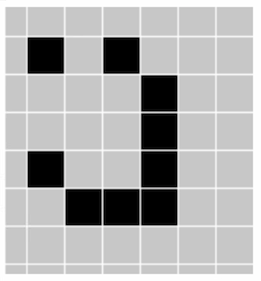
This 1 minute 58 second video was sent to us by Marius, a Grade 6 student in Shanghai, on November 25, 2022 at 9:43 PM. He explained: “There are blocks, gliders, boats, ships, beehives, blinkers and even a traffic light.”
Marius began learning math and programming with us after his first-grade summer vacation. Over five years, he gradually moved beyond school-level exercises and started building independent projects. At this point, he had written a complete implementation of Conway’s Game of Life and proudly recorded this video, naming the file “gameOfLife”.
In Conway’s Game of Life, a system proposed by mathematician John Conway in 1970, extremely complex behaviors emerge from a very small set of rules. Each cell on a grid evolves based on four simple rules, yet the system produces: - moving “gliders” - oscillating patterns - explosive formations - stable structures Marius’ program demonstrates exactly this kind of emergent “mini-universe.” Gliders quietly drift across the grid. Oscillators pulse back and forth. Explosions bloom briefly before settling into stability.
This is not a child completing an assignment.
It is a young programmer using code to express a dynamic world.
We believe that the right guidance can ignite a child’s desire to explore, build, and express ideas through computation.