Living Museum of Learning
The Compass Arrives
Cloud had just completed two concentrated hours of mathematics and programming.
We had explored Khan Academy, written his first Swift program, and watched his first blue triangle appear in Apple's iPad Simulator.
While discussing the triangle afterward, I realized something.
His understanding of coordinates and geometry still needed a stronger foundation.
So I asked a few seemingly unrelated questions:
Can you use a compass?
Can you construct the perpendicular bisector of a line segment?
Can you bisect an angle using only a straightedge and compass?
The answers would tell me far more than another test score.
Cloud's mother was on her way home from work.
She immediately asked:
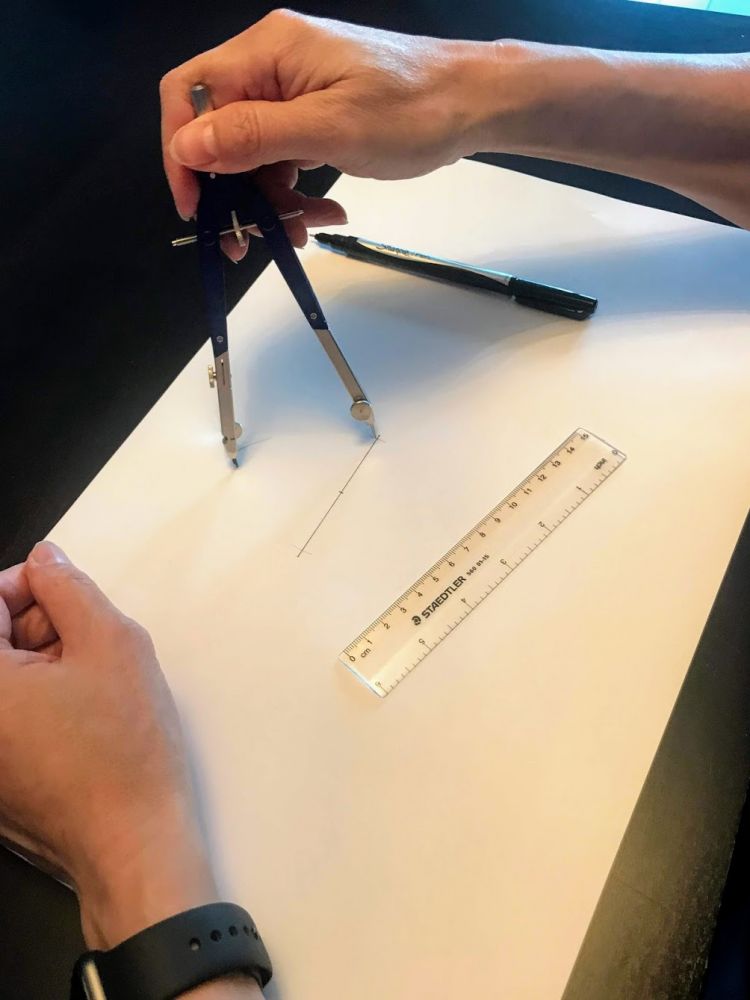
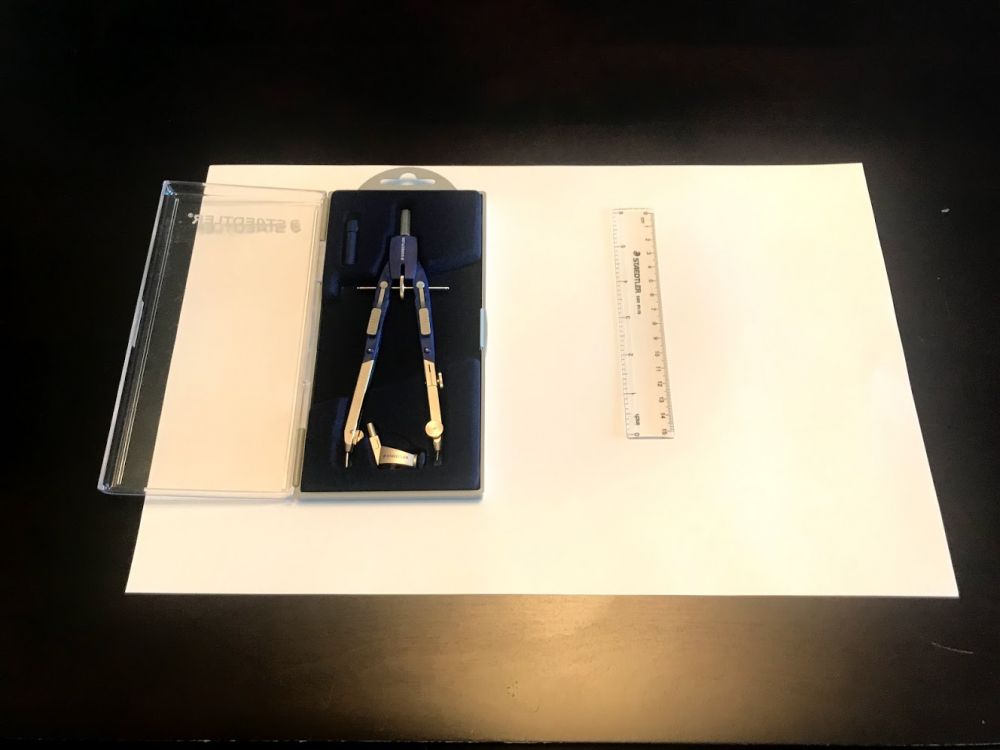
"Should I buy him a compass?"
"Yes."
"What else?"
"A ruler and some white paper."
Then came her next question:
"The stationery store doesn't have an unmarked straightedge."
"That's okay. We'll simply ignore the markings."
"Why?"
"Because this is the beauty of ancient Greek mathematics."
The goal isn't to measure.
The goal is to construct.
The ruler draws perfect lines.
The compass creates perfect circles.
Every result can be proved.
That is the elegance Euclid left to the world more than two thousand years ago.
Something unexpected happened.
The conversation was no longer only about Cloud.
His mother became curious too.
She wasn't just buying school supplies.
She was asking why mathematicians deliberately refuse to measure.
At almost the same time, another message arrived.
Cloud had gone out to dinner with classmates.
"Sorry," his mother wrote.
"They're probably playing games."
I replied:
"That's perfectly fine."
"He has already completed two hours of deep, focused learning this morning."
Learning needs rhythm.
Concentration.
Rest.
Curiosity.
Then another day begins.
A compass is a simple object.
Yet for over two thousand years it has invited generations of learners to discover that mathematics is not merely calculation.
It is construction.
It is proof.
It is beauty.
Sometimes a family's educational journey begins not with a textbook—
but with a parent walking into a neighborhood stationery store after work.