
Living Museum of Learning
A Letter That Returned One Year Later
Last year, a teacher watched a story that moved him deeply.
A father had made a courageous life decision under extraordinary circumstances. His story attracted worldwide attention, but behind every public story was a private family—especially children who had to face a new chapter of life.
The teacher did not want to simply comment.
He wanted to help.
Through a trusted connection, he sent a simple message:
"If there is ever an opportunity, I hope I can help your children."
There was no expectation of a reply.
It was simply one educator reaching out to another family.
Almost one year later, on the morning of August 3, 2026, the teacher opened an old email account.
He was not searching for this story.
Instead, he was thinking about another matter entirely.
Then an unexpected email appeared.
A father remembered the message from one year earlier.
After settling his family into a new country, he reached out with a simple question:
How can a parent help a child adapt, regain confidence, and continue growing in a new educational environment?
A message sent with kindness had traveled through time and returned.
Original Artifact
A fragment from the original email (with personal information removed):
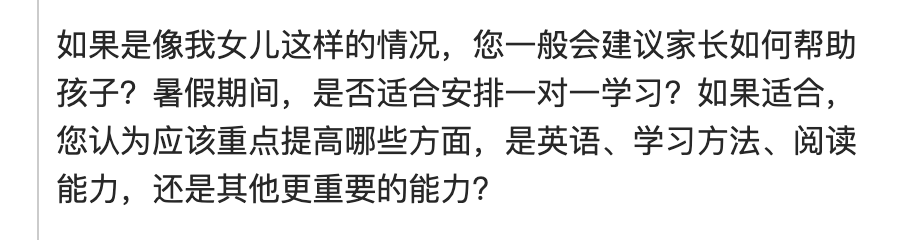
如果是像我女儿这样的情况,您一般会建议家长如何帮助孩子?
暑假期间,是否适合安排一对一学习?如果适合,您认为应该重点提高哪些方面,是英语、学习方法、阅读能力,还是其他更重要的能力?
English Translation:
For a situation like my daughter's, what would you generally recommend parents do to help their child?
During the summer vacation, would it be appropriate to arrange one-on-one learning? If so, what areas do you think should be the focus: English, learning methods, reading ability, or other more important abilities?
The museum discovered that this was never only about a lesson.
A public story became a private connection.
A message written without expectation became a bridge across time and distance.
The world often remembers dramatic moments.
But history is also made of quiet moments:
A person chooses kindness.
Another person remembers.
A child receives support.
A new journey begins.
Children do not automatically understand the difficult paths their families have traveled.
They need time, knowledge, maturity, and their own experiences to form their understanding.
The role of an educator is not to give a child someone else's answers.
It is to provide:
confidence to think independently;
skills to explore the world;
curiosity to keep learning;
and a safe place to grow.
Sometimes the most meaningful help is simply showing a child:
"You are capable. Your future is still yours."
A sincere message, even a small one, can cross years and distance. A single act of kindness can create possibilities that no one can predict.
Trust grows through sincerity, patience, and the willingness to help without expecting immediate results.
Behind every major story are ordinary human needs: a child who wants confidence, a parent who wants guidance, and a future waiting to be built.