
Living Museum of Learning
The Appetite We Must Not Waste
Rhea is three years old. She is very smart, and when something catches her attention, she can learn remarkably fast.
Yesterday, An shared a clip of Rhea counting from 1 to 100 in Chinese.
She did it beautifully.
My reaction was difficult to describe.
A whole year has passed, and we have not yet seen significant movement in something as simple as 2 + 3.
The contrast stayed with me.
Then came another clip.
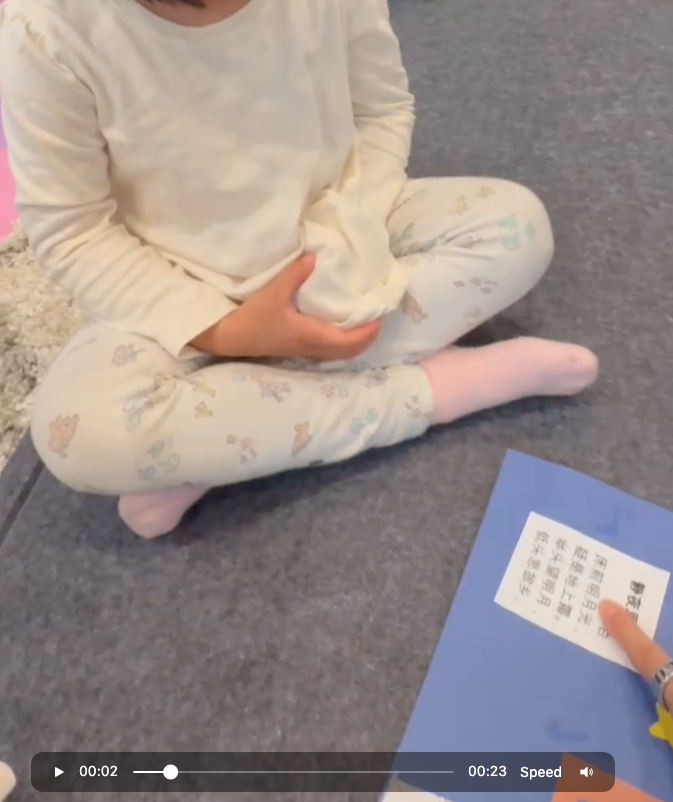
Rhea was going through a famous Chinese poem with Mommy.
“I don't know this,” Rhea said.
“疑,” Mommy offered.
“疑是地上霜,” Rhea repeated.
Then another gap.
“I don't know.”
She looked at Mommy again.
Her eyes were shining.
“举,” Mommy said.
“举头望明月,” Rhea continued.
And suddenly I understood my own reaction.
Rhea's appetite for learning is so precious that we should be very careful what we feed it.
This is not an argument against Chinese.
If Rhea loves Chinese, wonderful.
If she loves poetry, wonderful.
The problem is not the poem. The problem is not counting to 100.
The problem is that a year of an extraordinarily eager learner's life has passed.
What has she had the chance to discover?
Numbers can become much more than counting.
Two plus three can become:
What does “five” mean?
Can five be made in different ways?
Why does 2 + 3 equal 3 + 2?
What happens with ten?
Can we predict the answer without counting?
And then mathematics opens another door.
Patterns.
Shapes.
Infinity.
The stars.
The physical world.
Gauss. Newton. Euler. Euclid.
There are endless doors waiting.
A child can become very good at remembering something without becoming much better at thinking.
Performance is visible.
Curiosity is quieter.
But curiosity is the precious part.
When Rhea says, “I don't know,” and her eyes shine because she wants the answer, we are seeing something more important than a correct response.
We are seeing hunger.
Perhaps An and Gavin are teaching her Chinese partly for Cindy and me, because we are her grandparents and came from a Chinese-speaking generation.
If so, I understand. And I am grateful.
But Rhea does not owe our generation the repetition of our childhood.
She does not have to carry our educational baggage for us.
She gets to discover her own world.
Chinese can be one door.
Mathematics can be another.
Science can be another.
So can music, art, programming, nature, history, and countless things we have not even imagined.
The responsibility is not to fill every minute with “useful” learning.
It is to protect the appetite that makes learning possible.
Give her knowledge.
Give her questions.
Give her beautiful things.
Give her difficult things.
Give her the universe.
And be very careful what we feed her.