
Living Museum of Learning
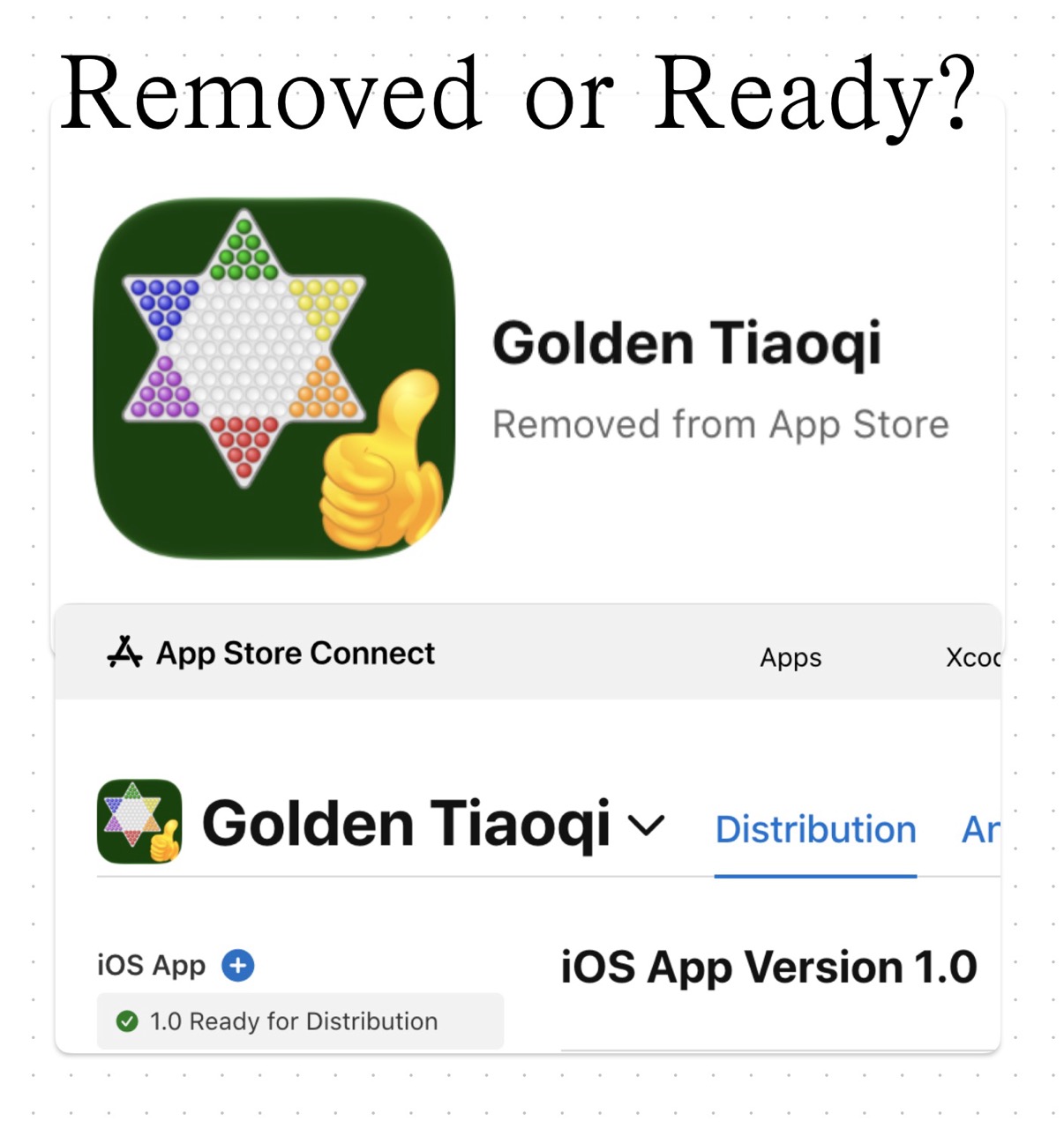
Removed or Ready?
Situation
Grandpa Donald developed Golden Tiaoqi, a digital version of Chinese Checkers, using Golden Thumb's shared multiplayer architecture. During a video call, he showed Rhea the game on his iPad, alongside the physical Chinese Checkers board An had brought back from Taiwan. He promised her that the game would soon be available on the App Store.
The game had been tested repeatedly, including games with Cindy. But Apple's first review rejected it because the reviewer couldn't make a move. After we replaced drag-and-drop with tap-to-select and tap-to-move, the next rejection cited Guideline 4.3(a): Spam.
Turning Point
Instead of immediately changing the architecture or abandoning the submission, Donald asked Apple to explain the alleged similarity between the apps. When Apple again reported that it couldn't make an opening move, he asked the million-dollar question:
Which piece did you select? Which destination did you attempt? Was the move legal under Chinese Checkers rules?
The question challenged us to distinguish a genuine software bug from a usability problem or a misunderstanding of the game's rules.
Emergence
On November 7, 2026, an unexpected email arrived: Golden Tiaoqi Version 1.0 was approved and eligible for distribution!
The family promise was kept. But App Store Connect introduced one final mystery: the Apps page displayed "Removed from App Store," while the app's detail page said "Ready for Distribution."
Donald captured the contradiction in a cover image titled "Removed or Ready?"
Learning
A software bug, a usability problem, and a misunderstanding of game rules are three different things. Shared software infrastructure does not make independently developed products identical. Clear communication, reproducible evidence, persistence, and thoughtful product differentiation all matter.
Most importantly, a rejection is not necessarily the end of a project. We should investigate, learn, improve, and keep our promises.
Theme
Persistence · Product Identity · Family Promises
☐ What Is Possible
How can a family board game become a digital multiplayer experience that connects generations across thousands of kilometres?
☐ How Does It Happen
How do game rules, user interaction, shared software architecture, testing, and app review come together to turn an idea into a published product?
☐ Why Does It Matter
Why do persistence, engineering integrity, and keeping a promise matter more than a rejection along the way?